
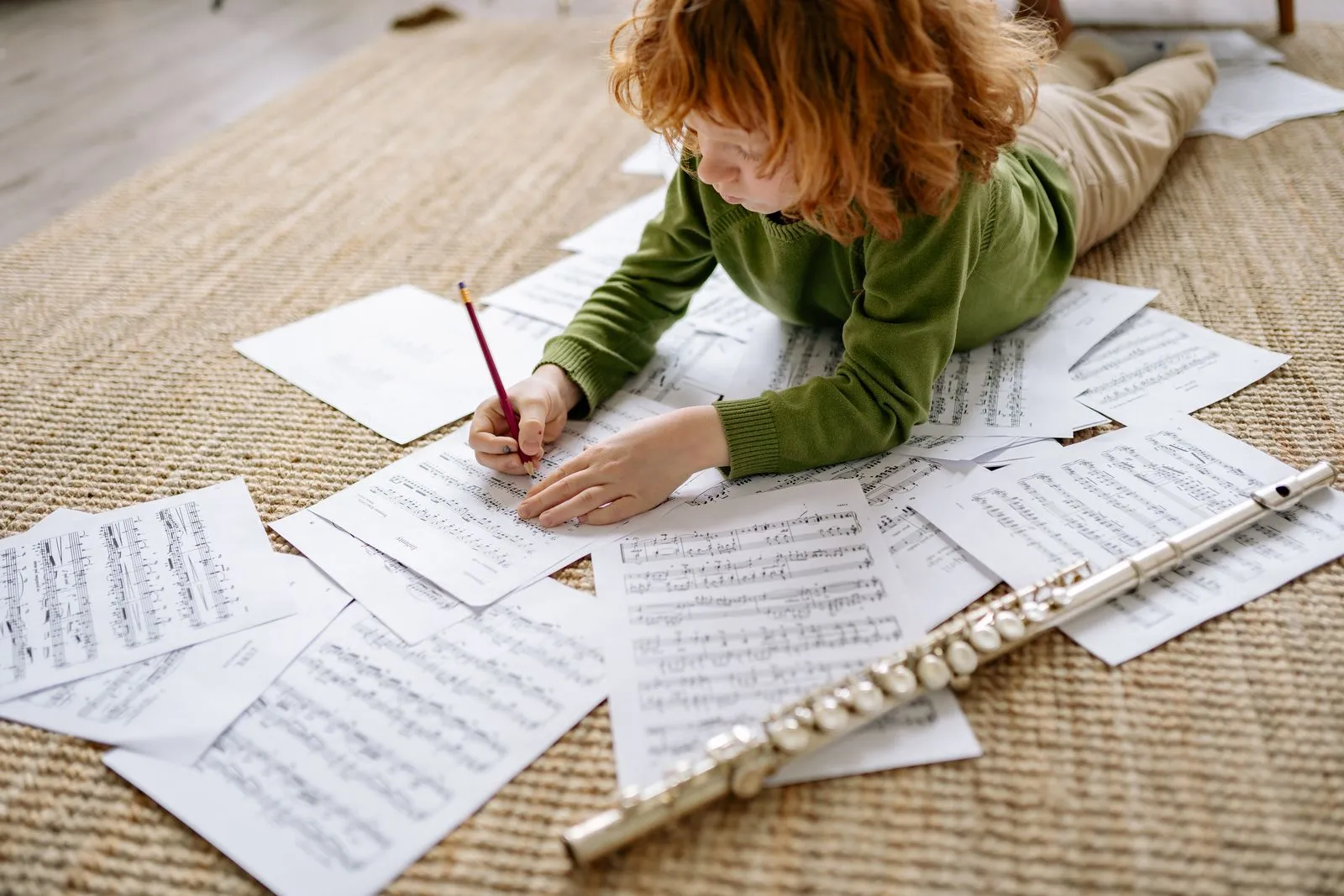
Composers do not need to write every musical idea on a staff the moment it appears. But a working knowledge of notation makes it easier to preserve ideas, develop them, and share them with musicians. Reading a score also helps composers understand how parts fit together, while clear writing gives performers useful direction. The goal is not flawless engraving at every stage. It is choosing notation skills that support the kind of music you want to make.
Read Music Beyond Your Own Part
Reading notation helps composers hear the larger design of a piece. Follow several lines at once to notice where melodies overlap, harmonies change, or rhythms create contrast. Even if you compose for a single instrument, reading scores can reveal ways other composers balance texture, pace, and expression.
Start with short, manageable examples. Mark phrase beginnings, repeated patterns, and changes in dynamics or articulation. Then listen to a recording while following the score. This connects symbols on the page to sound and helps you recognize which details matter most when planning your own music.
Capture Ideas Clearly
A written sketch can preserve a melody, rhythm, bass line, or chord pattern before the idea slips away. You do not need a polished score to begin. A few measures, a chord chart, or a rhythmic pattern may be enough, as long as you can understand it later.
Build a consistent way to label sketches. Note the key or tonal center when known, the tempo or feel, the instrument, and any performance idea that affects the sound. If a rhythm is approximate, say so. Clear notes reduce guesswork when you return to the material or share it with a collaborator.
Write for the Performer
Notation communicates what a performer needs to play and how the music should unfold. Learn the essentials for your chosen instruments: clefs, pitches, rhythms, rests, key and time signatures, dynamics, articulations, and common playing ranges. A score that follows these conventions is easier to rehearse and less likely to be misread.
Give directions where they will help, not simply to fill the page. Check that rhythms add up within each measure, accidentals are clear, and parts can be read at a practical page size. For unfamiliar instruments, consult a reliable reference or ask a knowledgeable player to review the part before rehearsal.
Use Notation to Revise
Writing music down makes comparison easier. You can place two versions side by side, spot a repeated phrase that needs variation, or see whether one instrument carries too much activity. A score can also expose practical problems, such as crowded rhythms or a line that sits awkwardly for its instrument.
Treat the page as a tool for testing ideas, not as proof that a passage works. Play or hear a realization of the draft, then revise both the notes and the notation. Keep dated or clearly labeled versions so you can track changes and return to an earlier choice when it serves the piece better.
Useful notation skills help composers move from an idea to a clear, playable draft. Begin with the symbols your music requires, practice reading scores, and make sketches that your future self can understand. As your work grows, consider developing a score with a composition teacher who can help you strengthen both the music and its presentation.