
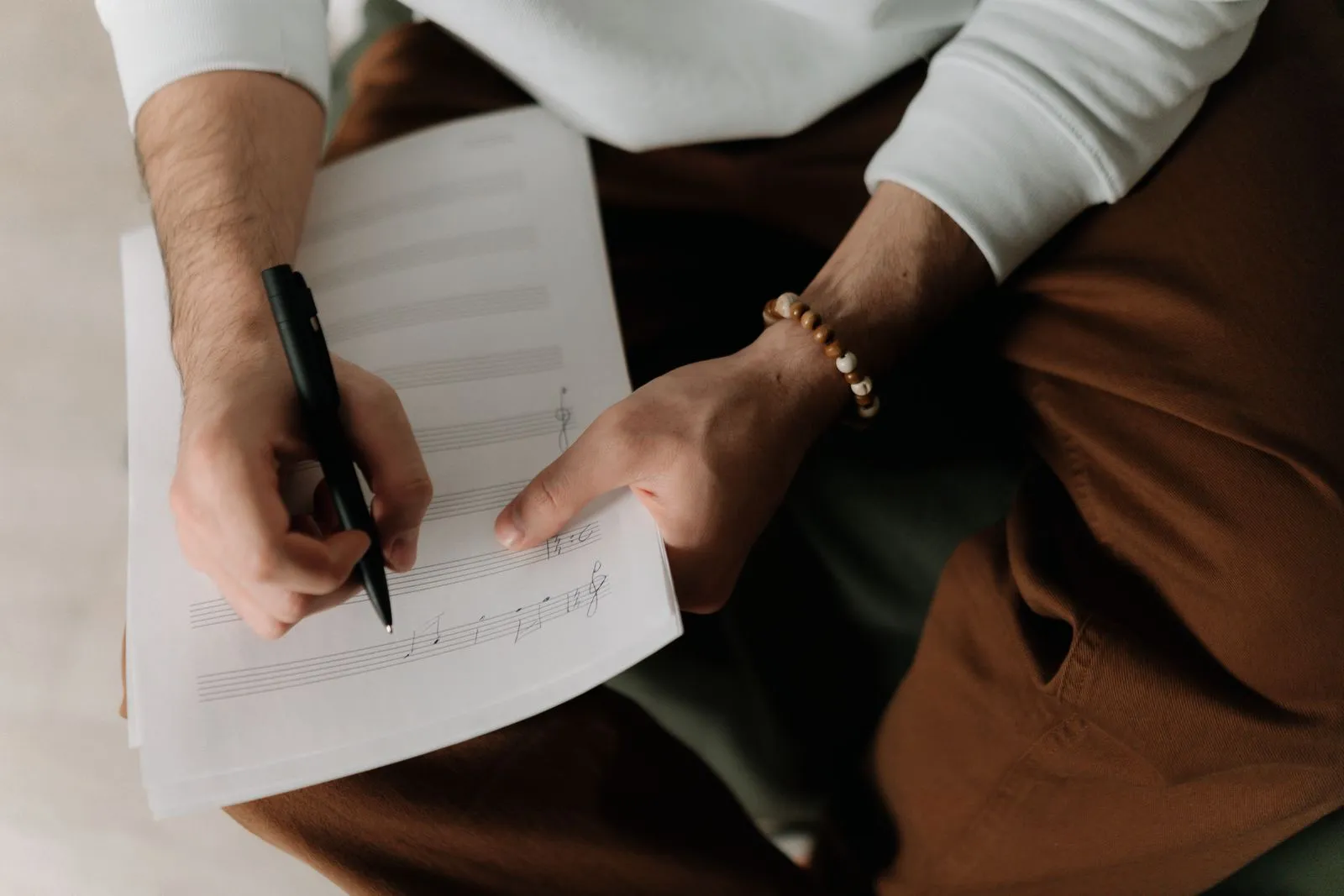
A regular composition practice does not require hours of free time or a constant stream of inspiration. It grows from returning to the work, even for a short session, and giving each session a clear purpose. A steady routine helps you capture ideas before they fade, make decisions about unfinished pieces, and learn what supports your creativity. Start with a schedule that fits your life, then use small, repeatable steps to make composing easier to begin.
Choose a Repeatable Time
Pick a time you can protect most weeks, rather than waiting for an open afternoon. You might compose for 20 minutes before work, after dinner, or during a regular weekend block. Attach the session to an existing habit, such as making coffee or setting up your instrument. A dependable cue reduces the effort of deciding when to start.
Keep the commitment realistic. If your schedule changes often, choose a weekly target such as three sessions instead of naming exact days. Put those sessions on your calendar and prepare your tools in advance: a notebook, instrument, recording app, or notation software. When a session gets interrupted, reschedule it without treating the missed time as a reason to stop.
Set Small Session Goals
Give each composing session one concrete task. Instead of writing “work on my piece,” try “draft an eight-bar melody,” “test two chord changes,” or “record three versions of the ending.” A small goal creates a clear starting point and a visible result. It also keeps a short session useful, even if you do not finish a larger section.
Separate idea generation from editing when possible. During a drafting session, collect musical possibilities without judging every note. In a later session, choose what to keep, revise, or remove. If you feel stuck, make the goal smaller: hum a phrase into your phone, write a rhythm, or play one variation. Finishing a modest task builds momentum for the next visit.
Keep Unfinished Ideas Moving
Create a simple home for fragments, such as one notebook or a clearly named digital folder. For each idea, note the date, instrument or sound in mind, and one detail about its direction. A short recording can preserve timing and phrasing that written notes may miss. Keep the system easy enough to use in the moment; elaborate filing can become another reason to postpone composing.
When you return to an unfinished piece, listen or read it once before making changes. Write down what seems promising and what question needs attention next. Then choose one experiment, such as changing the rhythm, shifting the register, or extending the phrase. You do not need to solve the entire piece in one sitting. A specific next step turns an abandoned fragment into active material.
Review and Adjust
At the end of each session, leave yourself a brief note about what you did and what to try next. This makes it easier to begin again without reconstructing your thought process. Save versions rather than overwriting them, so you can compare choices and recover material you later want to use.
Once a week, look over your calendar and current ideas. Notice which session lengths and times felt workable, then adjust the plan to match your actual routine. Track participation rather than judging each session by whether it produced a finished composition. If you want guidance building a routine around your musical goals, Riverstone Music Studio in Little Rock offers composition instruction.
A dependable composition practice comes from making the work easy to return to: schedule a realistic session, choose one small task, and leave a clear next step. Some sessions will generate new music; others will help you understand what an idea needs. Start with a routine you can sustain, and consider composition instruction if you would like support shaping it.